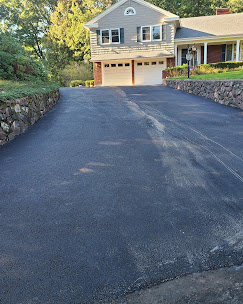
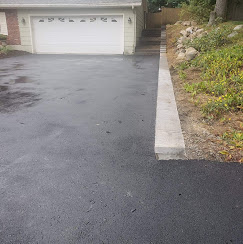
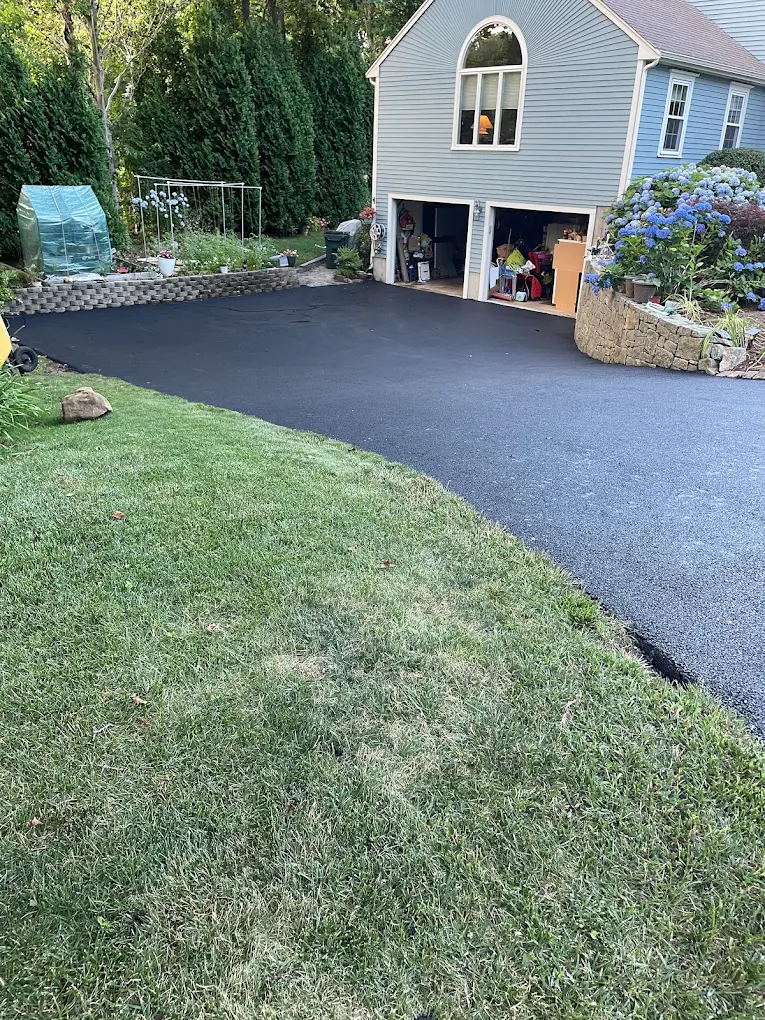
Protect the driveway you already paid for.
Sealcoating and crack filling keep water, sun and road salt out of the asphalt. Done every two to three years, it roughly doubles the life of a driveway for a small fraction of the cost of replacing it.
When to seal
New asphalt should cure for a full year before its first coat. After that, seal when the surface has gone gray and small cracks start to show. If you can see loose stone or the surface is spidering, call sooner rather than later.
- —Hot rubberized crack filling before sealing
- —Oil-spot priming
- —Two coats of commercial-grade sealer, squeegee or spray
- —Edges cut clean against lawn and walkways
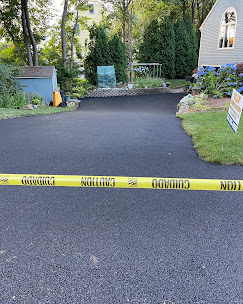
- —Dry and drivable in 24–48 hours
Seal, or repave?
Sealer is a coating, not a repair. If the driveway is sunken, has potholes, or alligator cracking across large areas, the base has failed and sealing will only hide it for a season. We will tell you honestly which one you need.
- —Surface gray, hairline cracks → seal
- —Cracks under 1/2 inch → fill and seal
- —Sunken spots, potholes, wide cracks → repave
- —Not sure → we come look for free
How a driveway sealcoating job goes
Inspect
Check for cracks, drainage problems and any spots that need real repair first.
Clean
Blow and scrape the surface, treat oil stains, fill cracks with hot rubber.
Seal
Two coats of sealer, edged by hand along lawn, walks and garage.
Cure
Keep cars off for 24–48 hours depending on weather.